
For decision-makers evaluating advanced aluminum casting solutions, the tilt-pour casting process offers a combination of engineering precision, process consistency, and cost control that is well suited to medium-volume manufacturing. This article details the core principles, process advantages, and technical considerations of tilt-pour casting within Semi-Permanent Mold Casting, promoting informed choices for high-performance industrial applications.
Author: Wes Parker, President and CEO, ProCast Technologies Inc.
Key Takeaways
- Precision-controlled fill: tilt-pour casting governs metal velocity through automated mold rotation, suppressing the turbulence that drives oxide entrainment, porosity, and core erosion in gravity-fed aluminum and zinc components.
- Cost-effective at medium volumes: lower tooling investment and controlled cycle times make the process well-suited to production runs of 500 to 50,000 pieces.
- Engineering and validation under one roof: Procast applies in-house Solidification Analysis and casting simulation to each part geometry, with CMM inspection and pressure testing to 150 psi under an ISO 9001:2015-certified quality system.
Process Fundamentals: Principles of Gravitational Pour Casting
What is the tilt-pour casting process?
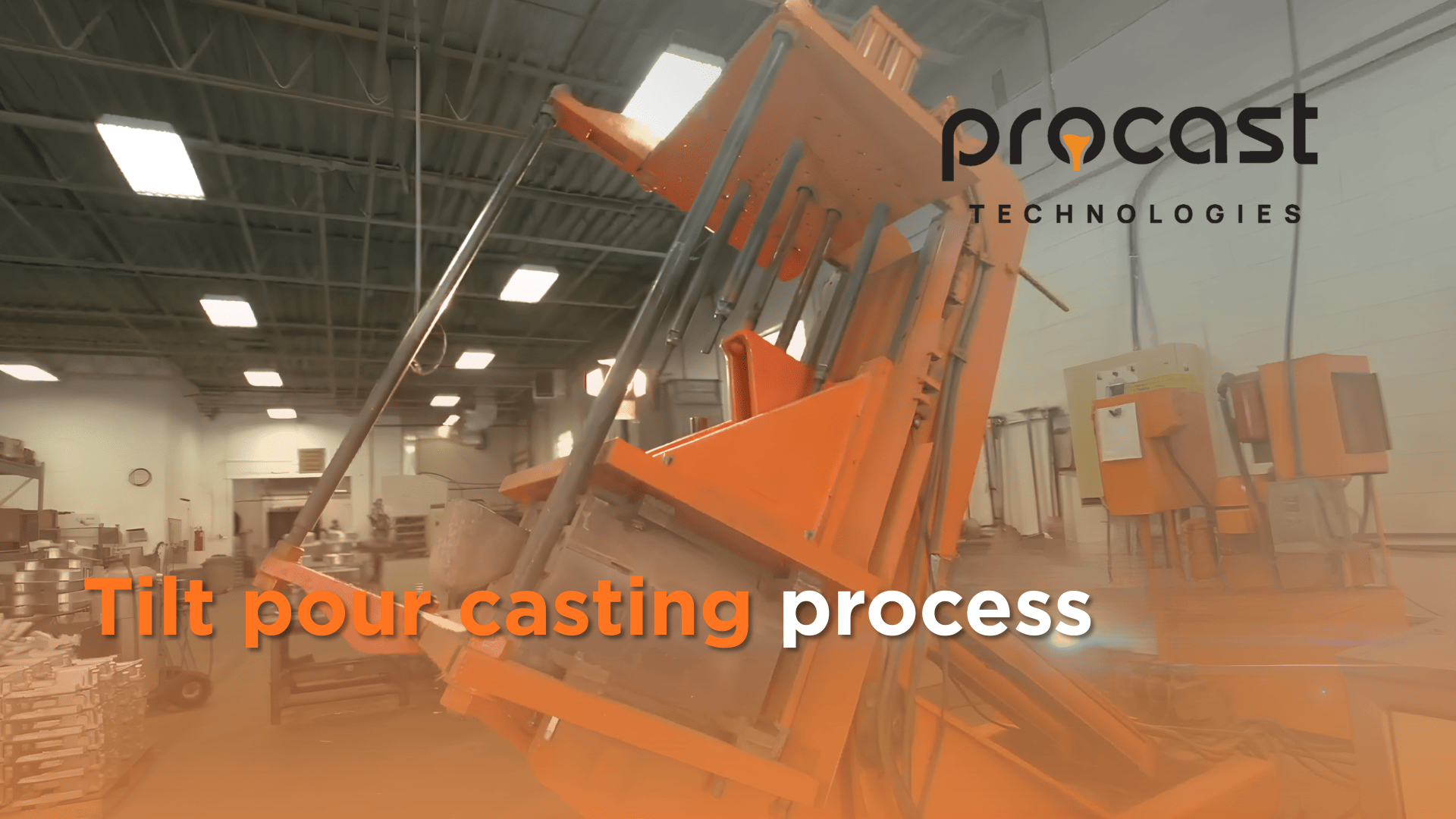
The tilt-pour casting process is a precision-controlled method for introducing molten aluminum into a permanent or semi-permanent mold. What distinguishes it from conventional static gravity casting is the use of a tilt-pour casting machine that rotates the mold and metal together from a near-horizontal to a vertical position.
Fill velocity is governed by the machine’s tilt rate, not by static head height. This dynamic, machine-controlled motion produces a laminar, continuous metal front, minimizing turbulence, air entrainment, and aluminum casting defects. The result is improved mechanical properties and a higher-integrity casting, particularly for complex or pressure-tight components.
What is the process of pour casting?
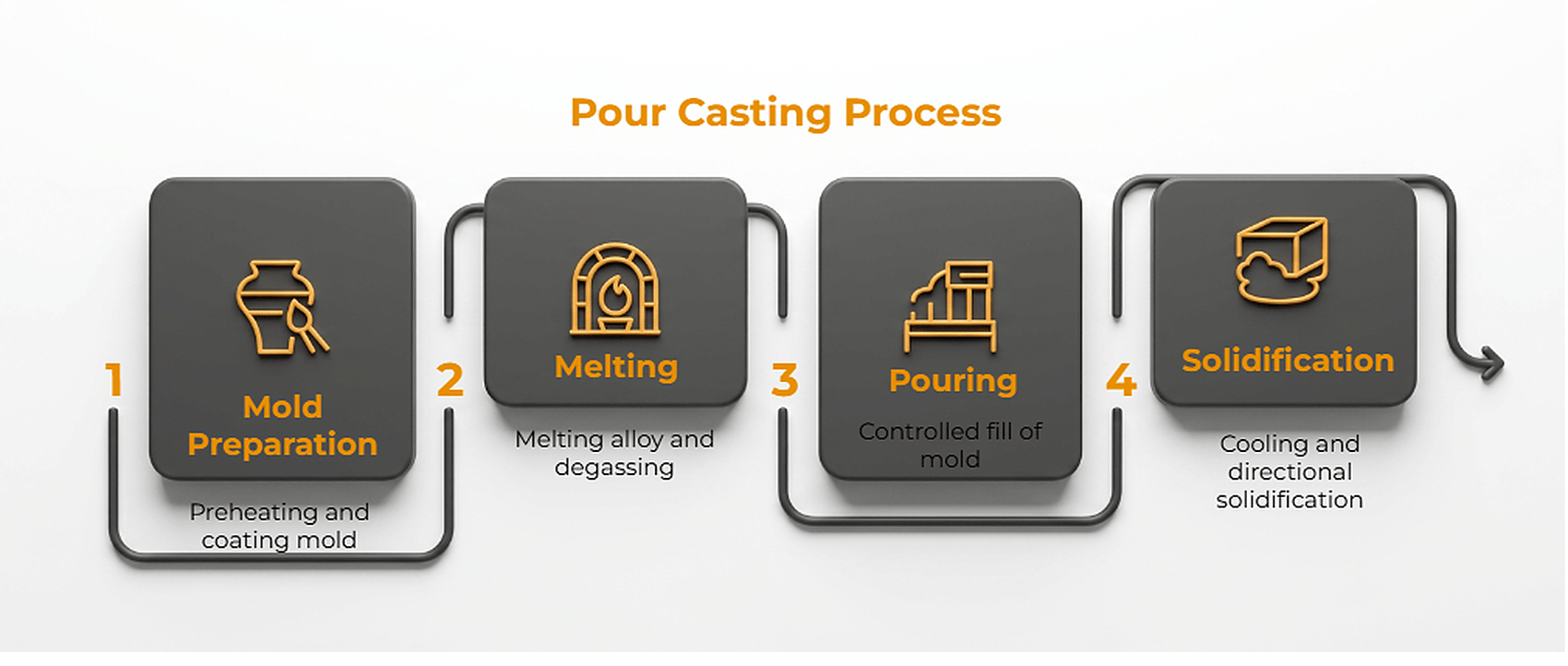
Pour casting encompasses both static and tilt pour methods. The general steps run as follows.
- Mold preparation. The steel or iron die is preheated and coated with a refractory wash to regulate heat transfer and protect tool surfaces. Sand cores are positioned for internal features as required by the part geometry.
- Melting. Aluminum or zinc alloy is melted to the required pouring temperature and degassed to minimize hydrogen, the leading source of gas porosity in castings. Hydrogen solubility in aluminum drops sharply at the liquid-to-solid transition, which makes degassing a precondition rather than an optional refinement. (Totten & MacKenzie, Handbook of Aluminum, Vol. 1, Marcel Dekker, 2003. Source)
- Pour rate control. In a static pour, gravity drives the metal down a sprue into the cavity, with fill velocity dictated by the vertical drop. In the tilt-pour casting process for metal, the mold is rotated using a tilt-pour casting machine, and the fill velocity is governed by the controlled tilt rate, resulting in a smoother, laminar fill.
- Solidification. The casting cools and solidifies directionally, with careful process design to feed shrinkage and avoid defects.
The metallurgical consequences of these approaches are significant. Static charge can introduce turbulence, entrain oxides, and increase the risk of internal defects. The tilt-pour casting process for metal achieves a calmer fill, reducing surface disruption and improving part integrity. In-house engineering, Solidification Analysis, and simulation determine the optimal method for each part geometry across semi-permanent mold casting techniques.
Fluid Dynamics: Quality Control and Velocity Optimization
How does tilt-pour casting improve casting quality and consistency? The tilt-pour casting process improves structural quality by minimizing turbulence during mold filling, reducing aluminum casting defects, and maintaining a uniform liquid-metal velocity throughout the cavity.
Controlled mold rotation by a tilt-pour casting machine suppresses the formation of porosity, internal shrinkage, and oxide film entrainment. By keeping the metal front laminar, the tilt pour casting process limits the folding of air and oxides into the alloy, directly improving pressure integrity and mechanical consistency. Automated machines enable precise control over the fill curve, producing repeatable results even in complex geometries.
What are the disadvantages of pouring the molten metal very fast or very slowly in casting?
Poor control of pour rate, either too fast or too slow, creates predictable aluminum casting defects.
Pouring too fast increases mold turbulence, leading to macro-porosity, oxide entrainment, and surface erosion. These defects compromise mechanical strength and can be detected through pressure testing, but they are best prevented through process control rather than caught after the fact.
Pouring too slowly allows the metal to lose heat before the cavity is filled, resulting in cold shuts, incomplete fills, and premature solidification. Automated fill-curve control in modern tilt-pour casting machines maintains the optimal window between these extremes. This defines the best tilt-pour aluminum casting outcomes as a function of process capability, not as a supplier-specific claim.
Market Analysis: Eligible Components and Industry Applications
What types of products or industries benefit most from using tilt pour casting?
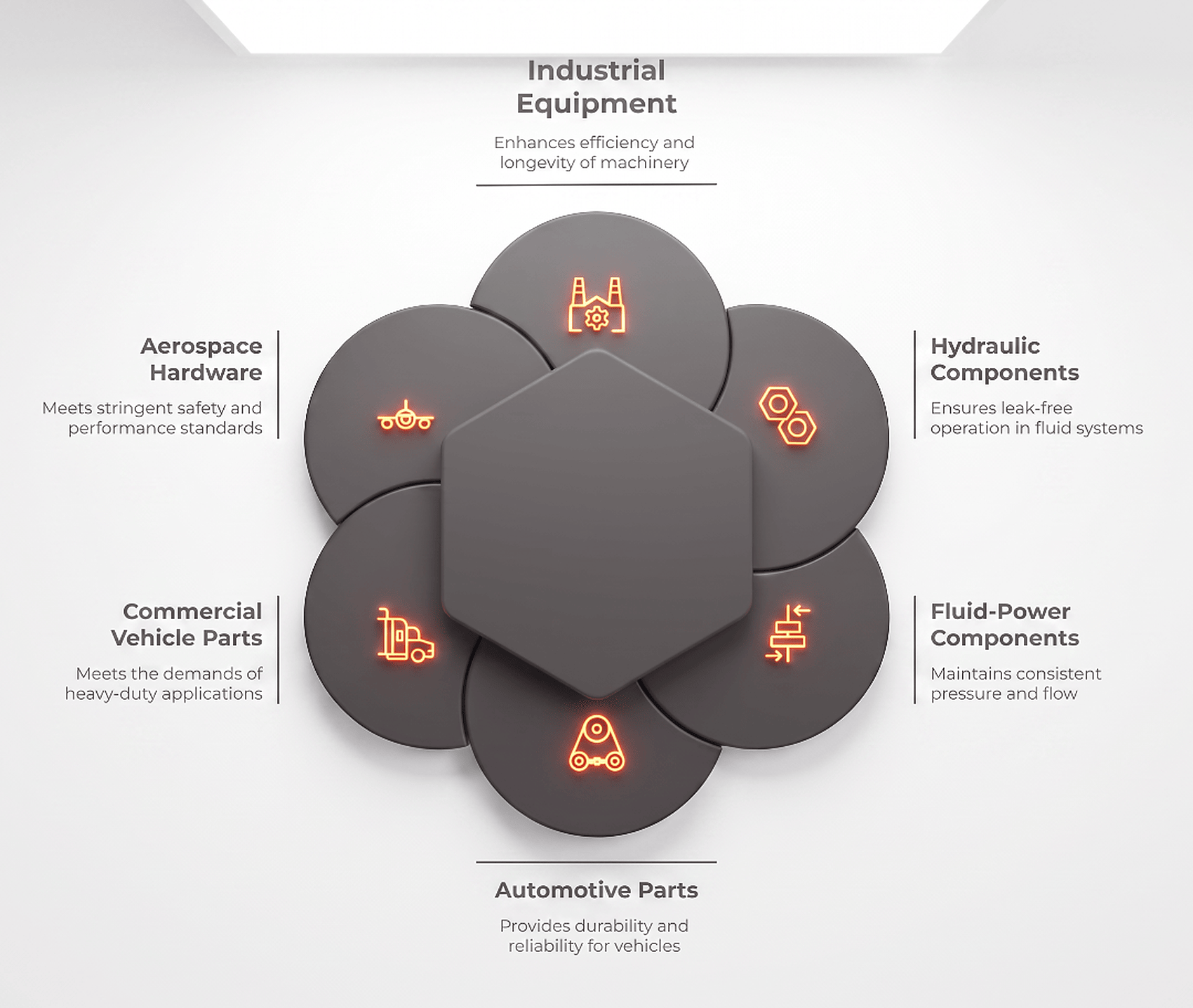
Tilt pour aluminum casting is most often specified for applications that demand high integrity, pressure tightness, and consistent mechanical properties. Typical product categories include hydraulic and fluid-power components, automotive and commercial vehicle parts, aerospace hardware, and industrial equipment such as pumps and valve bodies.
These sectors require castings where a single internal defect can cause functional failure, and where the laminar fill of the tilt-pour casting process for metal enhances first-pass yield and long-term reliability. Medium-volume production runs (500–50,000 pieces) benefit from the process’s efficiency and lower tooling costs compared to die casting. These properties are inherent to the process itself, not to any specific supplier.
What types of parts are best suited for tilt pour casting?
The best candidates for tilt-pour aluminum casting are parts with heavy walls, intricate cored geometries, and stringent surface-finish requirements. Heavy-walled parts benefit from directional solidification and reduced shrinkage porosity. Components with complex internal passages or sand-core arrangements are well suited for this process because the controlled fill prevents core erosion and dimensional drift. Parts requiring superior surface roughness (160-400 RMS) or minimal oxide inclusions also see measurable improvements through the tilt pour casting process.
The intersection of component design and process selection is critical: wall thickness (3/16 in minimum), internal features, and finish specifications all inform whether tilt pour or another semi-permanent mold casting technique is optimal. Procast engineers evaluate these factors using SolidWorks models and simulation before tooling commitment, ensuring process and part alignment from the outset.
For design constraints and further guidance, see: Are there specific design limitations or considerations when choosing semi-permanent mold casting for complex aluminum components?
Tooling Engineering: Mold Materials and Metallurgical Standards
How do the material choices for the molds impact the casting process and final product quality?
Mold material selection in permanent and semi-permanent mold casting techniques directly affects heat transfer rate, tool life, thermal fatigue resistance, and as-cast surface finish.
High-thermal-conductivity materials promote rapid, uniform solidification, thereby improving mechanical properties and reducing shrinkage-related defects in aluminum casting. Alloy development for permanent and semi-permanent mold processes has concentrated on this intersection of castability, high-temperature performance, and heat-treatment response. (Major & Hartlieb, International Journal of Metalcasting, 2009. Source)
Durable mold materials extend tooling life and maintain dimensional tolerances over long production runs, while resistance to thermal cycling minimizes cracking and surface degradation. The trade-off lies in balancing initial tooling cost, achievable part quality, and long-term durability. Selecting the appropriate mold material is a critical engineering decision requiring consideration of the specific demands of each casting application.
What quality certifications or standards should reputable aluminum casting companies typically have?
The aluminum casting industry recognizes several quality frameworks. ISO 9001 sets general requirements for quality management systems. Sector-specific systems build on it: IATF 16949 adds automotive supply-chain requirements around defect prevention and variation reduction, while AS9100 layers aerospace and defense requirements onto the ISO 9001 base. Each covers a defined scope, so a certificate is meaningful only for the processes and sites it names.
These standards provide frameworks for process control, traceability, and continuous improvement. For buyers seeking the best tilt-pour aluminum casting to consistently meet demanding specifications, it is essential to verify that a supplier’s certification is active and covers the relevant scope.
These certifications directly support process control, defect prevention, and traceability, which are key to minimizing aluminum casting defects across both semi-permanent and permanent mold casting techniques. For a buyer comparing tilt-pour aluminum casting suppliers, a documented system means acceptance criteria are applied consistently on every run.
Conclusion
The tilt-pour casting process stands out as an advanced solution for business leaders seeking high-integrity, precision-engineered aluminum and zinc castings. By combining in-house engineering, Solidification Analysis, integrated tool-and-die capabilities, and state-of-the-art process controls, including ERP/MES and rigorous ISO 9001:2015 quality systems, Procast delivers turnkey aluminum castings that meet the most stringent industry requirements. For medium-volume production, tilt-pour casting offers a unique combination of cost efficiency, design flexibility, and superior mechanical properties that traditional methods cannot match.
Related reading
Tilt pour casting is one execution of the permanent mold method, so the strengths and trade-offs of the wider process apply here as well. If you need more information on those, see Permanent Mold Casting Advantages and Disadvantages.
If your project demands pressure-tight, complex, or high-performance castings, connect with Procast’s engineering team to discuss how our tilt-pour expertise and integrated process can deliver consistent, on-spec results from design through assembly.